WOMEN’S HEALTH & HEALING IN GUATEMALA
Summer 2026 Study Abroad Service Trip to Guatemala
With the VCU Institute for Women’s Health & Highland Support Project
May 23-30, 2026
TRIP DETAILS:
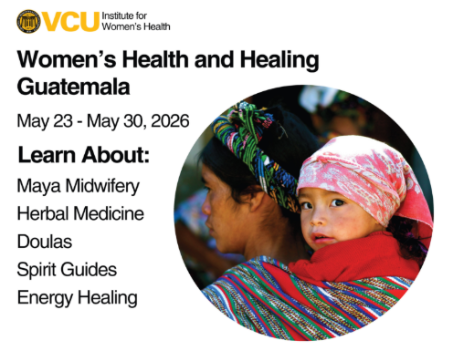 We will spend a week in partnership with indigenous women, midwives, nurses & community leaders, learning about traditional Maya medicine and exploring the history of women’s health care and healing in Guatemala. The itinerary includes cultural, educational, service, and exchange aspects. Together we will explore traditional Maya midwifery practices, medicinal herbs, healing and mindfulness practices, and new initiatives supporting community-based doulas. Utilizing the transformational approach employed by the Highland Support Project, the VCU team will have an opportunity to meet with women in the Highlands of Guatemala to address women’s health issues, including maternal health, childbirth, indigenous practices, healing, leadership, and change. The experience explores “the interconnectedness of people, problems, and solutions.” Together this service-learning opportunity will encourage the sharing of Western and local knowledge to empower women in the development of holistic place-based wellness care.
Upon arrival in Guatemala, the team spends the first night visiting the breathtaking Lake Atitlan in Panajachel to acclimate and experience the markets and culture of Guatemala’s Highlands.
We then drive and stay in the Highlands where we will work with the women’s cooperative Asociacion de Mujeres del Altiplano (AMA) in Quetzaltenango.
The experience will include speakers on Maya healing traditions, a coffee cooperative tour, and a presentation from women working on a weaving social enterprise. The team will have a chance to shop at local indigenous markets and visit La Antigua Guatemala, which was the colonial Spanish capital of Central America. It is a World Heritage site and one of the most popular tourist destinations in Guatemala.
GUATEMALA - COST: $1900.00 + AIRFARE.
A $450 nonrefundable deposit will be due when you submit an application
The total program fee payment for the 8-day trip is $1,900. Your program fees cover in-country lodging, transportation, meals, interpretation, meeting facilitation, and a guide within Guatemala. This fee also covers the cost of the HSP emergency medical, evacuation, and liability insurance policy that covers every traveler on the trip.
The program fee also includes:
- CISI international health and emergency assistance insurance plan
- VCU $450 Education Abroad Administration Fee
Airfare is additional. (around $750 round trip)
Note: a few minimal additional expenses include a few optional activities/excursions i.e.: Fuentes Georginas’ hot springs (about $6) and a tour of the Pre-Columbian Mesoamerican archaeological site of Iximche (about $6) salsa lessons, and tips (for driver/cooks- about $10 each team member for the week) and any personal spending.
The trip is open to all, including VCU students, faculty, staff, and community members.
Space is limited. The application deadline is March 6, 2026, with a $450 non-refundable deposit
Questions: contact Andrea Reed at agreed@vcu.edu or Heather Ashton at heather.ashton@vcuhealth.org Janett Forte (janett.forte@vcuhealth.org)
Women's Health and Healing Guatemala Trip 2025 Report
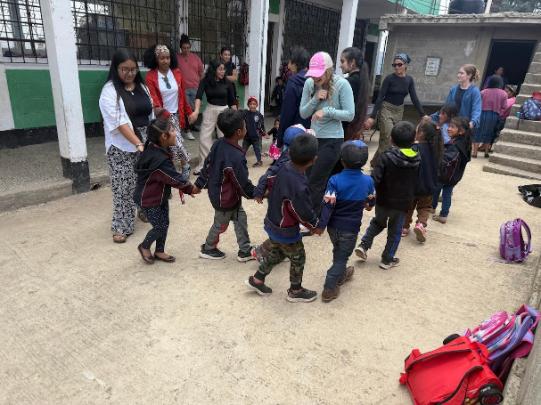
In May 2025, the VCU Institute for Women’s Health sponsored the Women’s Health & Healing service-exchange program in Guatemala, conducted in partnership with the Highland Support Project (HSP) and the Asociación de Mujeres del Altiplano (AMA). The program was co-led by Heather Ashton, Assistant Coordinator of the VCU Humphrey Fellowship Program in the Department of Psychology, and Andrea Reed, DNP, MSN, RN, from the VCU School of Nursing. Janett Forte, founder of the IWH program, also contributed her expertise as a consultant throughout the experience. The week-long experience brought together an interdisciplinary team composed of a group of undergraduate students from a range of academic majors, a graduate student, and two faculty members—one affiliated with the Honors College and the other from the Department of Physical Therapy. As a community-based learning opportunity, participants engaged directly with Indigenous-led health initiatives, traditional midwifery practices, and grassroots development efforts in the Western Highlands of Guatemala. This immersive model fostered reciprocal knowledge exchange and experiential engagement with local leaders. The program emphasized mutual learning, cultural respect, and meaningful collaboration. The itinerary included visits to Panajachel, San Juan, La Cumbre, and Quetzaltenango, where participants engaged directly with local communities through culturally immersive experiences. These included learning from community health leaders, sharing meals with Maya women, and participating in traditional practices such as a sacred Maya fire ceremony and a temazcal steam bath—experiences that emphasized respect for Indigenous spiritual and ecological traditions. In preparation for these engagements, participants completed a series of interdisciplinary learning modules designed to deepen understanding of key themes including cultural humility, Maya cosmology, traditional plant medicine, maternal health systems, nutrition and food sovereignty, and community-based models of care.
These modules were carefully aligned with the program’s educational goals, which aimed
to:
1. Promote cultural humility by encouraging ongoing self-reflection and awareness of
positionality;
2. Enhance understanding of Indigenous health systems and how they coexist with
biomedical approaches;
3. Foster respect for traditional ecological knowledge and its role in health and healing;
4. Analyze social determinants of health through a decolonial and gender-aware lens;
5. Encourage ethical engagement in global health by centering community voices and
leadership.
A standout moment that brought many of these objectives into focus was a dialogue with
staff from CODECOT (the Departmental Coordinator of Traditional Midwives of
Quetzaltenango), an Indigenous women-led organization that trains and supports
comadronas. Through CODECOT’s community-based model, rooted in Maya cosmology,
herbal medicine, and holistic health, students witnessed how ancestral wisdom continues to
play a critical role in maternal and community health. Participants observed the integration
of Indigenous and biomedical practices and gained a deeper appreciation for how
comadronas serve not only as birth attendants but also as counselors, spiritual guides,
herbalists, and advocates for community well-being. This interaction embodied the
program’s emphasis on mutual learning and culturally grounded care, leaving a lasting
impression on participants as they reflected on the power of community-led health systems.
One of the most impactful and community-driven moments of the trip was the opportunity to
lead a women’s circle with mothers whose children attend Escuela Oficial Rural Mixta
Caserío La Cumbre. This gathering created a safe and collaborative space for dialogue
around nutrition, food security, and intergenerational health. Unfortunately, there has been a
growing trend in this region of families selling all of their homegrown produce at the market
and instead purchasing inexpensive, processed foods like instant noodles. This shift stems
from the perception that packaged foods are healthier or represent a more “modern” or
American diet.
In response, our educational session covered Guatemala’s “One Pot” dietary initiative,
which promotes balanced, nutrient-rich meals using affordable and locally available
ingredients. Together, we reviewed the core food groups, shared healthy meal planning
tips, and discussed culturally appropriate recipes that support both nourishment and family
traditions. The session concluded with a hands-on communal cooking activity, were the
group prepared a shared lunch guided by the One Pot recommendations. This experiential
approach not only reinforced nutrition education in a practical way, but also affirmed
traditional culinary knowledge and emphasized the importance of sustainable, community-
led approaches to wellness.
This experience supported several of the programs learning objectives, including:
● Promoting culturally relevant health education;
● Examining the impact of globalization and marketing on Indigenous health
behaviors;
● Fostering community-based dialogue and participatory learning; and
● Supporting food sovereignty and nutritional equity through collaborative action.
Another meaningful highlight of the trip was a university-hosted lecture on domestic
violence. Approximately 20 social work students from the University of San Carlos came to
AMA to present their research on domestic violence rates and resource access for women
in both urban and rural areas. They also shared a resource guide they created to help
women understand their rights. The session offered insight into gender-based health
disparities within legal and cultural frameworks. Afterward, we all explored how violence
prevention education could be incorporated into elementary schools in both Guatemala and
the U.S., aligning with the program’s focus on gender equity, culturally informed public
health, and community-driven solutions.
Throughout the week, participants demonstrated noticeable growth in self-awareness and
cultural understanding. Many students moved beyond surface-level curiosity and began to
express a deeper, more reflective stance rooted in humility and respect. Quantitative data
supported these observations, with post-trip survey scores showing marked increases in
knowledge, understanding, and intended application of culturally responsive practices. For
example, average scores across relevant items rose from 3.2 to 4.5 on a 5-point Likert
scale, indicating stronger agreement with statements related to cultural competence,
respect for traditional knowledge, and confidence in community engagement. Qualitative
reflections further confirmed that students were developing more confidence and clarity in
how they might use these lessons in their future careers, whether through health education,
community engagement, or social justice advocacy.
This week-long community-based experience offered participants a meaningful window into
Guatemala’s maternal health landscape, revealing both the systemic challenges, such as
government regulation of traditional midwifery, and the ongoing inequities faced by rural
Indigenous communities. At the same time, it celebrated the strength and resilience of
grassroots networks grounded in reciprocity, dignity, and intergenerational wisdom. More
than anything, the trip reaffirmed a collective truth: that healing and leadership thrive when
anchored in cultural humility, mutual respect, and community-led knowledge.
This journey marked the 13th year that Susan G. Kornstein, M.D., Executive Director of the
Institute for Women’s Health (IWH), has sponsored the trip as an initiative deeply aligned
with IWH’s mission. Through a commitment to advancing interdisciplinary research, training
the next generation of health professionals, and promoting excellence in women’s health
care, the IWH fosters both scientific inquiry and community engagement. Supporting this
trip reflects a broader dedication to improving the health of women across the lifespan by
centering education, equity, and collaboration.
Report prepared by:
Heather Ashton, Assistant Coordinator, VCU Humphrey Fellowship Program
Andrea Reed, Assistant Professor, VCU School of Nursing
Janett Forte, Consultant and Founder, IWH Women’s Health and Healing Program
Date: June 13, 2025
Our community partner information:
Highland Support Project
http://highlandsupportproject.org/
Asociación de Mujeres del Altiplano (AMA)
https://amaguate.org/